| Feature | uPVC Doors | Composite Doors |
|---|---|---|
| Strength & Security | Good | Excellent — usually stronger due to solid core |
| Insulation | Good | Better — very energy efficient |
| Weather Resistance | Good | Excellent — less likely to warp or sag |
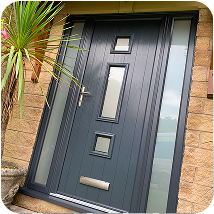
| Appearance / Aesthetics | Standard look | Premium, realistic woodgrain and varied styles |
| Colour Options | Decent | Wide range, including dual-colour finishes |
| Maintenance | Very low — wash clean | Very low — wash clean |
| Cost | Lower cost | Higher upfront cost |
| Longevity | 15–25+ years | 25+ years (often longer) |
| Security Ratings Available | Yes | Often comes with high-end security features |
👍 Pros & Cons
uPVC Doors
Pros
- Budget-friendly
- Low maintenance
- Good insulation and weather resistance
- Available in colours and with glazing
Cons
- Can look less “premium”
- May fade slightly over many years
- Not as strong as composite
Composite Doors
Pros
- Excellent durability and rigidity
- Superior thermal efficiency
- Very secure options available
- More attractive and versatile in styles/finishes
Cons
- Higher initial cost
- Slightly heavier (but engineered for performance)
💡 Key Considerations Before Choosing
🏡 Budget
- uPVC: Better if you want a good, reliable door with lower cost.
- Composite: Worth the extra spend if aesthetics, lifespan and energy savings matter.
🌡 Energy Efficiency
Composite doors typically have better insulation — this can help reduce heating costs over time.
🛡 Security
Both can be secure, but composite doors are often fitted with multi-point locking and thicker construction.
🎨 Looks
If your front door is a focal point, composite doors offer a more premium finish and design range.
📌 Quick Recommendation
✔ Renters or budget-conscious homeowners: uPVC is great.
✔ Owners focused on value, appearance and long life: Composite is usually the better long-term choice.
🧱 1. Construction & Materials
uPVC Doors
- Made from unplasticised polyvinyl chloride, a sturdy form of plastic.
- Often reinforced with internal steel sections for strength.
- Panels and glazing can vary, but most of the structure is synthetic.
What that means
- Lightweight but strong.
- Less likelihood of rot or rust — good for wetter climates like the UK.
- Materials are entirely synthetic.
Composite Doors
- Multi-layer build: a core (usually insulating foam or engineered timber), outer skins of Glass-Reinforced Plastic (GRP), and often internal reinforcements.
- The outer surface is textured and coloured — often designed to look like real woodgrain.
What that means
- Solid, rigid feel — feels heavier and more substantial than uPVC.
- Very stable in different weather conditions.
- Excellent insulation and structural integrity.
🛡 2. Security
Security is about both the material and the hardware.
uPVC
- Good performance with multi-point locking systems
- Largely dependent on the lock quality and reinforcement added.
- In basic versions, uPVC can be easier to force compared with a solid core door.
Composite
- Naturally more resistant to kicking and levering due to solid core and reinforced layers.
- Typically paired with high-end multi-point locks, strong hinges and anti-jemmy features.
Security takeaway:
Composite doors generally have higher resistance to break-ins — a key advantage if safety is a priority.
🌡 3. Thermal Efficiency
Keeping heat in and cold out helps reduce energy bills.
uPVC
- Good insulation — uPVC itself doesn’t conduct heat well.
- With foam cores and double-glazing, you get respectable U-values (measure of heat loss).
Composite
- Often better thermal performance thanks to a solid core plus insulated layers.
- Less thermal bridging (heat pathways through the frame).
What U-values mean
- Lower U-value = better insulation.
- Composite doors typically achieve lower U-values than standard uPVC doors.
🎨 4. Aesthetics (How They Look)
uPVC Doors
- Improved a lot from old plain white options.
- Available in:
- Colours (woodgrain foil finishes too)
- Glazing options
- Panel designs
- Still has a more uniform/plastic look, especially at lower price points.
Composite Doors
- Designed to replicate traditional doors with depth,
woodgrain texture, and premium appearance. - Very wide range of styles,
from classic to contemporary. - Can have dual-colour finishes — different outside vs. inside colours.
Appearance advantage:
Composite doors often look more luxurious and authentic, especially in traditional homes.
🌧 5. Weather, Durability & Maintenance
uPVC
✔ Doesn’t rot, rust, or corrode.
✔ Resists moisture well.
✘ Over time can fade slightly in strong sun.
Maintenance → mostly just cleaning.
Composite
✔ Very weather-resilient — won’t warp or sag easily.
✔ Colour and finish hold up well over time.
✔ Minimal maintenance — like uPVC, mostly wipe down.
Durability edge: Composite doors generally last longer with less change in appearance.
💰 6. Cost Comparison (UK context)
Although prices vary by supplier, size, style and hardware choices:
uPVC
- Lower upfront cost
- Good performance for budget-focused buyers
Composite
- Higher initial price
- Seen as a longer-term investment
- Often adds more to kerb appeal and potentially resale value